



How Much Do Durable Laboratory Stools Typically Cost?
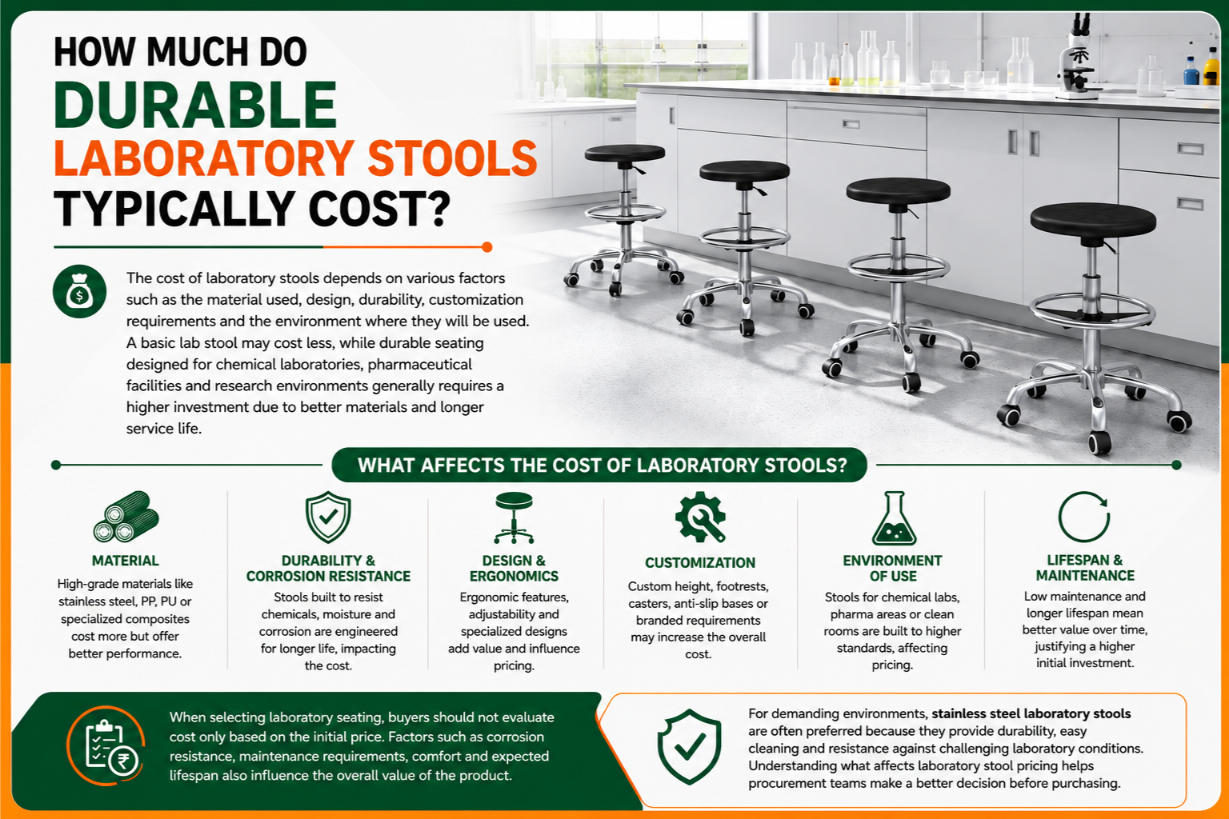
The cost of laboratory stools depends on various factors such as the material used, design, durability, customization requirements and the environment where they will be used. A basic lab stool may cost less, while durable seating designed for chemical laboratories, pharmaceutical facilities and research environments generally requires a higher investment due to better materials and longer service life.
When selecting laboratory seating, buyers should not evaluate cost only based on the initial price. Factors such as corrosion resistance, maintenance requirements, comfort and expected lifespan also influence the overall value of the product.
For demanding environments, stainless steel laboratory stools are often preferred because they provide durability, easy cleaning and resistance against challenging laboratory conditions. Understanding what affects laboratory stool pricing helps procurement teams make a better decision before purchasing.
What Is the Average Price of a Laboratory Stool?
The price of a laboratory stool can vary significantly depending on its construction, material quality and features. Basic models made from standard materials are generally more affordable, while heavy-duty stools designed for chemical and industrial laboratories are priced higher due to their enhanced performance.
A laboratory stool designed for professional use typically includes features that improve durability and usability, such as strong construction, stable bases, ergonomic seating and materials suitable for frequent cleaning. These factors contribute to the overall cost of the product.
Instead of focusing only on the lowest available price, laboratories should consider the application requirements and long-term performance expected from the seating solution.
Factors That Determine Laboratory Stool Prices
Several factors influence the final cost of laboratory stools. The material used in manufacturing is one of the biggest factors, as different materials offer different levels of durability, chemical resistance and maintenance requirements.
Other factors that affect pricing include the stool design, height adjustment options, seating comfort, load capacity and whether the product requires custom specifications.
For laboratory and industrial applications, pricing is usually influenced by:
- Material grade and construction quality
- Design and ergonomic features
- Quantity requirements
- Customisation needs
Understanding these factors helps buyers compare laboratory stools based on performance rather than only the purchase price.
Why Stainless Steel Laboratory Stools Cost More Than Basic Options
Stainless steel laboratory stools generally have a higher initial cost compared with basic seating options because they are manufactured for more demanding environments. The material provides better resistance against corrosion, moisture and frequent cleaning, making it suitable for long-term laboratory use.
In chemical labs and pharmaceutical facilities, furniture needs to maintain performance even with regular exposure to cleaning agents and challenging conditions. Stainless steel helps reduce issues such as rusting, surface damage and frequent replacements.
Although the upfront investment may be higher, durable stainless steel seating can provide better value over time due to its longer service life and lower maintenance requirements.
How Material Quality Affects Laboratory Seating Cost
Material quality directly impacts the durability, performance and lifespan of laboratory stools. A stool manufactured with better-quality materials can withstand daily usage, maintain structural strength and perform reliably in demanding environments.
For example, stainless steel grades, surface finishing and manufacturing quality can influence both the cost and performance of laboratory seating. Higher-quality materials are often selected for facilities where hygiene, corrosion resistance and reliability are important.
Choosing the right material ensures that the seating meets the laboratory's operational requirements while reducing the chances of premature replacement.
What Factors Influence Laboratory Stool Cost?
The cost of a laboratory stool is influenced by more than just the material used in manufacturing. Factors such as the working environment, required features, durability expectations and quantity requirements all play an important role in determining the final price.
For chemical laboratories, pharmaceutical facilities and research centres, seating needs to provide reliable performance under demanding conditions. This is why professional laboratory stools are designed with specific materials and features that improve safety, comfort and service life.
Understanding these cost factors helps buyers select the right seating solution based on their actual requirements instead of choosing only based on the lowest price.
Material Selection and Stainless Steel Grade
Material selection is one of the biggest factors affecting laboratory stool cost. Different materials offer different levels of durability, chemical resistance and maintenance requirements, which directly influence the overall investment.
Stainless steel is commonly selected for demanding laboratory environments because it provides excellent corrosion resistance and can withstand frequent cleaning and daily usage. However, the grade, thickness and quality of stainless steel used in manufacturing can impact the final cost.
Laboratories working with chemicals, solvents or strict hygiene requirements often prefer higher-quality materials because they provide better long-term performance compared with standard seating options.
Design Features, Adjustability and Ergonomic Requirements
The design of a laboratory stool also affects its pricing. Basic stools may focus only on providing seating, while professional laboratory stools are designed to support user comfort and efficient working conditions.
Features such as adjustable height, ergonomic seating, stable bases and user-friendly designs can increase the cost but provide better usability during extended laboratory operations.
For researchers, technicians and laboratory staff who spend long hours working at benches or equipment stations, investing in comfortable and well-designed seating can improve productivity and reduce discomfort.
Customisation, Quantity and Project Requirements
Laboratory furniture requirements can vary depending on the facility, which is why customisation can influence the overall cost of laboratory stools. Some projects may require specific dimensions, finishes, seating designs or configurations to match existing laboratory setups.
Bulk orders can also affect pricing because suppliers may provide different options based on quantity requirements and project scope. Large pharmaceutical facilities, educational institutions and industrial laboratories often require multiple units with consistent specifications.
Discussing requirements with an experienced laboratory furniture supplier helps buyers understand the available options and select stools that match their application needs.
Stainless Steel Laboratory Stool Cost Compared With Other Materials
When comparing laboratory stool prices, buyers should consider the difference between initial investment and long-term value. Different materials may have different price points, but their performance, maintenance requirements and expected lifespan can vary significantly.
Lower-cost seating options may be suitable for environments with limited usage or lower exposure risks. However, chemical laboratories and research facilities often require materials that can handle continuous use, cleaning procedures and challenging conditions.
Stainless steel laboratory stools are generally considered a reliable option because they provide a balance of durability, hygiene and long-term performance.
Stainless Steel vs Plastic Laboratory Stool Pricing
Plastic laboratory stools are often considered a more economical option because they generally have a lower initial purchase cost. They can be suitable for applications where chemical exposure and heavy usage are limited.
However, stainless steel seating offers advantages in environments where corrosion resistance, durability and frequent cleaning are important. The higher initial cost is often justified by the longer service life and reduced maintenance requirements.
The right choice depends on the laboratory environment, usage frequency and performance expectations rather than price alone.
Long-Term Value of Durable Laboratory Seating
The overall value of a laboratory stool is determined by how well it performs throughout its service life. A lower-priced product may appear economical initially, but frequent repairs or replacements can increase the total ownership cost over time.
Durable seating materials, such as stainless steel, are designed to maintain performance even in demanding laboratory environments. This makes them a practical investment for facilities where reliability and consistent usage are important.
For procurement teams, evaluating long-term value provides a clearer picture than comparing only the initial purchase price.
Why Lower Initial Cost May Increase Maintenance Expenses
Choosing laboratory stools based only on the lowest price can sometimes result in higher maintenance requirements in the future. Materials that are not suitable for laboratory conditions may experience faster wear, surface damage or reduced performance.
Regular replacement, repairs and downtime can add additional costs for facilities. Selecting seating designed for the specific laboratory environment helps reduce these issues and supports more efficient operations.
A balanced approach that considers quality, durability and application requirements usually provides better value over the lifespan of the product.
Are Premium Laboratory Stools Worth the Investment?
When purchasing laboratory seating, the lowest price option is not always the most cost-effective choice. Premium laboratory stools are designed for environments where durability, hygiene and consistent performance are important, making them a suitable choice for chemical labs, pharmaceutical facilities and research centres.
The value of a laboratory stool depends on how well it performs over time. A durable stool that requires less maintenance and replacement can provide better returns compared with a cheaper alternative that may not withstand demanding laboratory conditions.
For facilities where seating is used daily, investing in high-quality laboratory stools can help create a safer and more efficient working environment.
Benefits of Investing in Durable Laboratory Seating
Durable laboratory seating provides advantages beyond basic functionality. Professional laboratory stools are designed to handle regular usage, cleaning procedures and the specific challenges found in laboratory environments.
High-quality seating helps maintain consistent performance while reducing concerns related to damage, instability or frequent replacement. This is especially important in facilities where laboratory staff spend several hours working at benches, instruments or testing stations.
Choosing durable materials also helps laboratories maintain a professional and organised workspace while supporting long-term operational needs.
Reducing Replacement and Maintenance Costs
The initial purchase price of a laboratory stool is only one part of the overall investment. Maintenance requirements, repairs and replacement frequency can significantly affect the total cost over the product's lifespan.
Seating manufactured with durable materials such as stainless steel generally requires less maintenance because it can withstand moisture, cleaning processes and demanding usage conditions. This reduces the need for frequent replacements and helps facilities manage long-term costs more effectively.
For laboratories planning long-term operations, selecting reliable seating can be a practical way to improve cost efficiency.
Choosing Seating Based on Laboratory Requirements
The right laboratory stool should be selected based on the specific environment where it will be used. A chemical laboratory may require stronger corrosion resistance, while a research or educational lab may have different priorities related to comfort and budget.
Before purchasing, buyers should evaluate factors such as:
- Type of laboratory application
- Exposure to chemicals or cleaning agents
- Duration of daily usage
- Required comfort and adjustability
Understanding these requirements helps laboratories choose seating that provides the right balance between performance, comfort and investment.
How To Select the Right Laboratory Stool Within Your Budget
Selecting a laboratory stool within a specific budget requires balancing cost with quality and performance. Instead of choosing based only on the lowest available price, laboratories should consider whether the seating can meet their operational requirements.
The right choice depends on factors such as the working environment, expected usage, material quality and required features. A well-selected laboratory stool can provide reliable performance while avoiding unnecessary replacement costs in the future.
For facilities purchasing laboratory furniture, comparing specifications and supplier capabilities helps ensure better decision-making.
Understanding Your Laboratory Environment and Usage
The working environment plays an important role in selecting the right laboratory stool. Chemical labs, pharmaceutical facilities and research centres may have different requirements depending on the substances handled and the type of work performed.
A stool used in a chemical laboratory should provide better resistance against corrosion and chemical exposure, while other environments may prioritise comfort, mobility or adjustability.
Understanding the daily working conditions helps buyers select seating that matches their actual needs.
Comparing Specifications Before Purchasing
Before finalising a laboratory stool purchase, buyers should compare important specifications rather than focusing only on price. Details such as material grade, construction quality, dimensions and design features can influence the overall performance of the seating.
A proper comparison helps procurement teams identify products that offer better durability and suitability for their laboratory environment.
Evaluating specifications also makes it easier to compare different suppliers and select a solution that provides long-term value.
Choosing a Reliable Laboratory Furniture Supplier
Selecting the right supplier is an important part of purchasing durable laboratory stools. A reliable supplier should be able to provide quality materials, consistent manufacturing standards and solutions suitable for different laboratory applications.
Experienced suppliers can also guide buyers regarding material selection, custom requirements and suitable seating options based on their facility needs.
For laboratories planning to purchase durable seating solutions, working with a trusted supplier helps ensure better product quality and long-term support.
Where To Buy Durable Stainless Steel Laboratory Stools Online With Delivery in India?
After understanding laboratory stool pricing, the next important step is selecting the right supplier. The quality of laboratory seating depends not only on the material but also on the manufacturer's experience, production standards and ability to deliver products suitable for professional laboratory environments.
Chemical labs, pharmaceutical facilities and research institutions often require seating that meets specific requirements related to durability, hygiene and chemical resistance. Buying from an experienced laboratory furniture supplier helps ensure that the stools are manufactured according to the expected quality standards.
Before placing an order, buyers should evaluate supplier capabilities, product specifications and support services to ensure they receive a reliable seating solution for their facility.
For a detailed guide on supplier selection and purchasing considerations, explore our guide on where to buy durable stainless steel laboratory stools online in India.
How To Choose a Reliable Laboratory Stool Supplier
Choosing a laboratory stool supplier requires evaluating more than just pricing. A reliable supplier should understand laboratory requirements and provide products designed for the conditions in which they will be used.
Buyers should look for suppliers who can provide clear product specifications, quality materials and consistent manufacturing standards. Experience in supplying laboratory furniture is also important because different labs may have different requirements based on their applications.
A supplier with technical knowledge can help customers select suitable seating based on factors such as material grade, design requirements and expected usage conditions.
Why Buying Directly From a Manufacturer Matters
Purchasing directly from a manufacturer can provide better control over product quality, customization and communication. Manufacturers can understand specific requirements and provide laboratory stools based on dimensions, materials and application needs.
For projects involving multiple units, direct sourcing can also simplify the procurement process and ensure consistency across all products. This is particularly useful for pharmaceutical companies, educational institutions and industrial laboratories.
Working with a manufacturer allows buyers to discuss their requirements directly and select a solution that matches their operational needs.
What To Consider Before Ordering Laboratory Stools Online
Before purchasing laboratory stools online, buyers should verify whether the product specifications match their laboratory environment. Important details such as material quality, construction, dimensions and finish can affect the performance and lifespan of the seating.
A proper evaluation before ordering helps avoid selecting stools that may not be suitable for chemical exposure, frequent cleaning or long working hours.
Buyers should also consider delivery support, customization availability and supplier responsiveness to ensure a smoother purchasing experience.
Conclusion: Making the Right Investment in Laboratory Seating
The cost of a laboratory stool depends on several factors, including material selection, design features, durability and application requirements. While basic options may have a lower initial price, durable seating designed for professional laboratories can provide better long-term value through improved performance and reduced maintenance needs.
For chemical laboratories, pharmaceutical facilities and research environments, stainless steel laboratory stools remain a preferred choice because they offer corrosion resistance, easy cleaning and reliable service life.
By understanding pricing factors and selecting the right supplier, laboratories can invest in seating solutions that support safe, efficient and long-lasting work environments.

 Rj Lab Craft India PVT.LTD Survey No 35/2, Mandvi Village, Shirsad Vajreshwari
Road, Vasai, Virar (East) Maharashtra 401303
Rj Lab Craft India PVT.LTD Survey No 35/2, Mandvi Village, Shirsad Vajreshwari
Road, Vasai, Virar (East) Maharashtra 401303