



Where To Buy Durable Stainless Steel Laboratory Stools Online With Delivery in India?
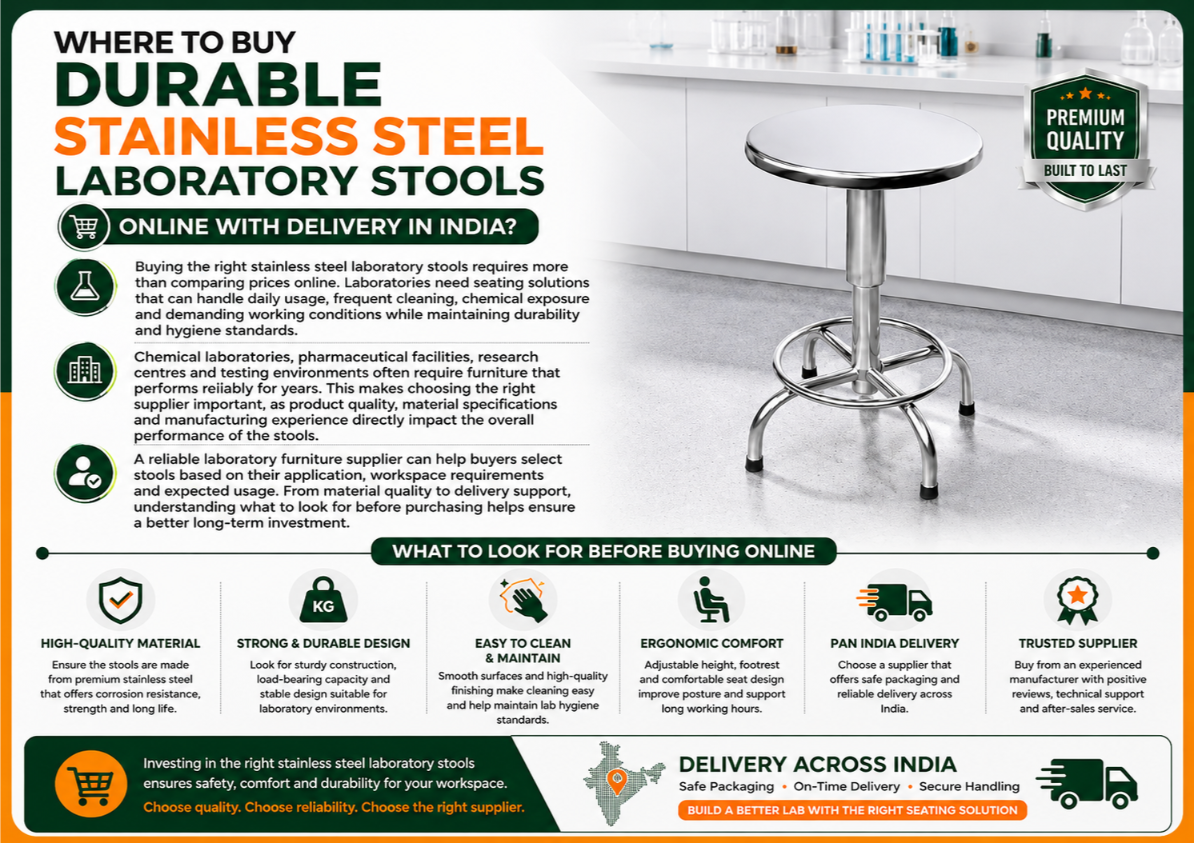
Buying the right stainless steel laboratory stools requires more than comparing prices online. Laboratories need seating solutions that can handle daily usage, frequent cleaning, chemical exposure and demanding working conditions while maintaining durability and hygiene standards.
Chemical laboratories, pharmaceutical facilities, research centres and testing environments often require furniture that performs reliably for years. This makes choosing the right supplier important, as product quality, material specifications and manufacturing experience directly impact the overall performance of the stools.
A reliable laboratory furniture supplier can help buyers select stools based on their application, workspace requirements and expected usage. From material quality to delivery support, understanding what to look for before purchasing helps ensure a better long-term investment.
What To Consider Before Buying Stainless Steel Laboratory Stools Online
When purchasing laboratory stools online, buyers should evaluate whether the product is suitable for their specific working environment. A stool designed for a chemical laboratory may require different performance characteristics compared with seating used in an educational or general-purpose lab.
The right laboratory stool should provide a balance between durability, comfort, safety and ease of maintenance. Factors such as stainless steel quality, construction design and surface finish play an important role in determining how well the seating performs over time.
Before placing an order, laboratories should review the product specifications and supplier capabilities to ensure the stools meet their operational requirements.
Checking Material Quality and Stainless Steel Specifications
The quality of stainless steel used in laboratory stools directly affects their durability and resistance to challenging conditions. Laboratories exposed to moisture, chemicals and regular cleaning procedures require materials that can maintain strength and appearance over long periods.
Stainless steel is commonly preferred for laboratory seating because it offers corrosion resistance, easy maintenance and a hygienic surface. However, factors such as stainless steel grade, thickness and manufacturing quality can influence the overall performance of the product.
Choosing stools made with suitable material specifications helps laboratories reduce maintenance issues and ensures reliable performance in demanding environments.
Evaluating Design, Comfort and Durability Features
Although durability is important, laboratory seating should also support user comfort, especially in environments where technicians and researchers spend several hours working. The design of the stool can influence posture, flexibility and overall user experience.
Features such as ergonomic seating, stable construction and suitable height options help create a more efficient working environment. A well-designed laboratory stool should allow users to work comfortably while maintaining the strength required for daily laboratory operations.
The ideal seating solution combines practical design with materials that can withstand the conditions of the facility.
Understanding Laboratory Requirements Before Ordering
Every laboratory has different requirements depending on its application. A chemical research facility may need higher corrosion resistance, while a testing laboratory may focus more on comfort, mobility and ease of cleaning.
Before purchasing stainless steel laboratory stools, buyers should consider where the stools will be used, how frequently they will be cleaned and what type of exposure they may experience during daily operations.
Understanding these requirements helps prevent selecting unsuitable products and ensures the seating solution provides better value over its service life.
How To Choose a Reliable Laboratory Stool Supplier in India
Selecting the right laboratory stool supplier is an important step because the supplier's manufacturing capability, product quality and understanding of laboratory requirements directly affect the final product performance. A reliable supplier should not only provide stools but also understand the specific needs of chemical labs, pharmaceutical facilities and research environments.
When purchasing stainless steel laboratory stools, buyers should evaluate factors beyond pricing. Product specifications, material quality, manufacturing standards and after-sales support all contribute to a smoother procurement experience and better long-term value.
Working with an experienced laboratory furniture supplier helps ensure that the seating solution is suitable for the intended application and can perform reliably under regular laboratory conditions.
Experience in Manufacturing Laboratory Furniture
A supplier with experience in laboratory furniture understands the performance requirements of different working environments. Laboratory stools used in chemical labs, pharmaceutical facilities and research centres need to meet higher durability and hygiene expectations compared with regular commercial seating.
Experienced manufacturers are familiar with factors such as material selection, surface finishing, ergonomic requirements and application-specific designs. This knowledge allows them to provide solutions that are better suited for professional laboratory environments.
Choosing a supplier with relevant manufacturing experience gives buyers greater confidence in product quality and consistency.
Quality Standards and Product Customisation Options
Laboratories may have different requirements based on their workflow, workspace design and operational needs. A reliable supplier should be able to provide laboratory stools with suitable specifications, finishes and design options.
Customisation may include adjustments related to dimensions, seating design, material selection or quantity requirements. This flexibility is especially useful for research facilities, pharmaceutical companies and industrial laboratories with specific furniture requirements.
Quality control during manufacturing is equally important because consistent production standards help ensure every stool meets the expected performance requirements.
Delivery Support and After-Sales Assistance
For laboratories, timely delivery and reliable support are important parts of the purchasing process. Delays in receiving essential furniture can affect workspace preparation and operational planning.
A dependable supplier should provide clear communication regarding product availability, delivery timelines and post-purchase assistance. This becomes particularly important for bulk orders or projects involving multiple laboratory furniture requirements.
Good supplier support helps buyers maintain a smoother procurement process and ensures they have assistance if any requirements arise after purchase.
Stainless Steel Laboratory Stools vs Plastic Stools: Which Is Better?
When selecting laboratory seating, many buyers compare stainless steel stools with plastic alternatives based on cost, comfort and durability. Both materials can be suitable for different applications, but their performance varies depending on the laboratory environment.
Plastic stools may work well in areas with limited exposure and basic seating requirements. However, stainless steel stools are generally preferred in chemical labs and professional research environments because they offer better resistance against corrosion, frequent cleaning and long-term usage.
The right choice depends on factors such as laboratory conditions, expected lifespan and the level of performance required from the seating solution.
Are Plastic Stools Comfortable for Laboratory Use?
Plastic stools can provide comfortable seating for certain applications, especially where lightweight furniture and easy movement are important. Their lower cost and simple design make them suitable for some educational labs, general work areas and low-exposure environments.
However, comfort alone is not the only consideration for professional laboratories. Seating must also provide durability, stability and resistance against the conditions in which it will be used.
For laboratories involving chemicals, continuous usage or strict hygiene requirements, buyers often prefer stronger materials that provide better long-term performance.
Durability and Maintenance Comparison Between Materials
The durability of laboratory seating depends on how well the material performs under daily operating conditions. Plastic stools may require less initial investment, but their performance can vary depending on chemical exposure, cleaning frequency and usage intensity.
Stainless steel stools generally provide better durability because they are resistant to corrosion, easier to maintain and capable of handling demanding laboratory environments. Their smooth surface also supports regular cleaning procedures, which is important in controlled facilities.
When comparing materials, buyers should consider the total value provided throughout the product lifespan rather than focusing only on the initial purchase cost.
Choosing the Right Material Based on Lab Application
The best laboratory stool material depends on the environment where it will be used. A general-purpose lab may have different requirements compared with a chemical research facility or pharmaceutical production area.
Facilities should consider factors such as chemical exposure, cleaning requirements, frequency of use and expected service life before selecting seating materials.
For demanding environments where reliability and hygiene are priorities, stainless steel laboratory stools are often considered a practical choice due to their combination of strength, durability and easy maintenance.
How Much Does a Laboratory Stool Cost Before Buying?
The cost of a laboratory stool depends on several factors, including the material used, design features, durability requirements and the type of laboratory where it will be installed. A basic stool may have a lower initial cost, while durable stainless steel laboratory stools designed for professional environments generally require a higher investment.
When comparing laboratory stool prices, buyers should consider the overall value rather than focusing only on the purchase price. Factors such as maintenance requirements, product lifespan and performance under laboratory conditions can significantly affect the long-term cost.
For a comprehensive pricing breakdown, explore our detailed guide on laboratory stool cost and pricing factors.
Factors That Influence Laboratory Stool Pricing
Laboratory stool pricing varies based on the specifications and features required for the application. The material quality is one of the most important factors because it determines the stool's resistance to corrosion, wear and regular cleaning procedures.
Other factors such as seating design, height adjustment options, construction strength and order quantity can also influence the final cost. Custom requirements for specific laboratory setups may further affect pricing depending on the complexity of the design.
Understanding these factors helps buyers compare different options and select a laboratory stool that meets both performance expectations and budget requirements.
Why Stainless Steel Stools Have Higher Long-Term Value
Stainless steel laboratory stools generally have a higher upfront cost compared with basic seating options because they are designed for demanding environments. The material provides better durability, corrosion resistance and easier maintenance, which can make it more economical over the product lifespan.
In chemical and pharmaceutical laboratories, furniture is exposed to frequent cleaning, moisture and challenging conditions. Stainless steel seating can maintain its structural integrity and appearance even with regular use.
Although the initial investment may be higher, durable laboratory stools can provide better value by reducing frequent replacements and maintenance requirements.
Balancing Price, Quality and Performance
Selecting a laboratory stool should involve balancing cost with the expected performance and application requirements. Choosing the cheapest option may reduce initial expenses but can result in higher costs if the product requires frequent repairs or replacement.
A better approach is to evaluate factors such as material quality, durability, comfort and supplier reliability. This helps laboratories choose seating that provides consistent performance while meeting operational needs.
For facilities purchasing laboratory furniture, the goal should be selecting a solution that offers the right combination of affordability, reliability and long-term usability.
Why Buy Stainless Steel Laboratory Stools From an Experienced Supplier?
Purchasing stainless steel laboratory stools from an experienced supplier helps ensure better product quality, technical guidance and reliable support throughout the buying process. Laboratory furniture is a specialised requirement, and suppliers with industry experience understand the importance of durability, hygiene and performance.
An experienced supplier can help buyers select seating based on their laboratory environment, whether it is a chemical lab, pharmaceutical facility, educational institution or research centre.
Beyond supplying products, a knowledgeable supplier adds value by helping customers choose suitable specifications and solutions for their specific requirements.
Benefits of Working With a Direct Laboratory Furniture Supplier
Working directly with a laboratory furniture supplier provides better communication and allows buyers to discuss their exact requirements. Direct suppliers can provide information about materials, manufacturing processes and available options.
For projects requiring multiple stools or customised solutions, direct communication helps maintain consistency in quality and specifications. It also allows buyers to receive better guidance throughout the procurement process.
This approach can be especially beneficial for organisations setting up new laboratories or upgrading existing workspaces.
Getting Custom Solutions for Different Laboratory Environments
Different laboratories have different seating requirements depending on their workflow, equipment setup and operating conditions. A research facility may require different specifications compared with a chemical processing or pharmaceutical environment.
Experienced suppliers can provide customised solutions based on factors such as stool dimensions, material preferences, design requirements and quantity needs.
Customisation allows laboratories to select seating that fits their workspace while ensuring the product performs effectively in its intended environment.
Ensuring Long-Term Product Reliability
Long-term reliability is an important consideration when purchasing laboratory seating. A quality supplier focuses on providing products that maintain performance through regular usage, cleaning and laboratory operations.
Reliable manufacturing practices, suitable materials and proper finishing contribute to the overall lifespan of laboratory stools. This helps laboratories avoid unnecessary disruptions caused by poor-quality furniture.
Choosing an experienced supplier ensures that the investment made in laboratory seating continues to provide value throughout its service life.
Applications Where Stainless Steel Laboratory Stools Are Commonly Used
Stainless steel laboratory stools are used across different industries where durability, hygiene and reliable performance are important. Unlike general-purpose seating, lab stools are designed to support environments where furniture is exposed to frequent cleaning, continuous usage and specific workplace requirements.
From chemical testing facilities to pharmaceutical production areas, laboratories require seating that can maintain strength and appearance while supporting daily operations. This makes stainless steel a preferred material for many professional laboratory environments.
Understanding where these stools are commonly used helps buyers select seating that matches their application and working conditions.
Chemical and Research Laboratories
Chemical laboratories require seating materials that can withstand exposure to chemicals, moisture and regular cleaning procedures. In these environments, laboratory stools need to provide consistent performance without issues such as corrosion, surface damage or reduced structural strength.
Stainless steel stools are commonly selected for chemical research areas because they offer excellent durability and are easier to maintain compared with many alternative materials. Their smooth surface also supports better cleaning practices, which is important in controlled laboratory environments.
Research facilities often prefer reliable seating solutions because laboratory work may involve long hours of testing, analysis and experimentation where comfort and stability are equally important.
Pharmaceutical and Healthcare Facilities
Pharmaceutical laboratories and healthcare-related facilities require furniture that supports strict hygiene and cleanliness standards. Seating used in these environments must be easy to clean and capable of maintaining performance through regular sanitisation.
Stainless steel laboratory stools are suitable for pharmaceutical applications because they provide a non-porous surface, corrosion resistance and long service life. These characteristics make them useful in quality control laboratories, production areas and research departments.
For facilities where maintaining a controlled and hygienic workspace is essential, durable laboratory seating helps support better operational practices.
Educational and Industrial Testing Laboratories
Educational institutions and industrial testing laboratories also require seating that can handle regular use while remaining practical to maintain. Student laboratories, engineering departments and testing facilities often need furniture that balances durability with everyday usability.
Stainless steel stools are suitable for these environments because they can withstand frequent movement, repeated cleaning and continuous usage. Their strong construction makes them a reliable option for laboratories where multiple users interact with the furniture daily.
Choosing durable seating helps educational and industrial facilities reduce replacement requirements while maintaining a functional workspace.
Final Considerations Before Buying Stainless Steel Laboratory Stools Online
Purchasing stainless steel laboratory stools requires careful consideration of material quality, supplier reliability and application requirements. Since laboratory seating is used in demanding environments, selecting the right product can significantly impact durability, maintenance and user experience.
Before making a purchase, buyers should evaluate whether the stool specifications match their laboratory conditions. Factors such as chemical exposure, cleaning frequency, expected usage and workspace design should all be considered.
A well-selected laboratory stool provides more than just seating. It supports a safer, cleaner and more efficient working environment.
Focus on Long-Term Performance Instead of Only Price
Price is an important factor when purchasing laboratory furniture, but it should not be the only deciding point. A lower-cost option may not always provide the durability required for professional laboratory environments.
Investing in quality stainless steel laboratory stools can provide better long-term value by reducing maintenance requirements and avoiding frequent replacements. This approach helps laboratories achieve better cost efficiency over the lifespan of the product.
Select a Supplier That Understands Laboratory Requirements
The right supplier plays an important role in ensuring product quality and suitability. A supplier with experience in laboratory furniture can provide better guidance regarding materials, designs and specifications.
Choosing a supplier who understands laboratory applications helps buyers receive seating solutions that are aligned with their operational needs rather than generic furniture options.
Make an Informed Purchase Decision
Buying stainless steel laboratory stools online becomes easier when buyers understand their requirements and evaluate suppliers carefully. Considering factors such as material quality, durability, comfort and delivery support helps ensure a successful purchase.
For laboratories looking for reliable seating solutions, selecting high-quality stainless steel laboratory stools can provide long-term performance, easy maintenance and better value for their investment.
Frequently Asked Questions Before Purchasing Laboratory Stools
Q: How Long Do Stainless Steel Laboratory Stools Last?
The lifespan of stainless steel laboratory stools depends on the quality of material, manufacturing standards and the environment where they are used. In properly maintained laboratory conditions, stainless steel seating can provide reliable performance for many years.
Factors such as chemical exposure, cleaning frequency and daily usage can influence service life. Choosing high-quality stainless steel construction and following proper maintenance practices helps maximise durability.
For professional laboratories, investing in durable seating reduces the need for frequent replacements and supports consistent workplace operations.
Q: Are Stainless Steel Laboratory Stools Suitable for Chemical Labs?
Yes, stainless steel laboratory stools are commonly used in chemical laboratories because they offer strong corrosion resistance and easy maintenance. Chemical labs often require furniture that can handle exposure to moisture, cleaning agents and accidental spills.
The non-porous surface of stainless steel makes it easier to clean and maintain hygiene standards compared with materials that may absorb stains or deteriorate faster.
This makes stainless steel a practical choice for environments where reliability and cleanliness are important.
Q: Can Laboratory Stools Be Customised According to Requirements?
Many laboratory stool suppliers provide customisation options based on the specific requirements of the facility. Customisation may include adjustments in dimensions, height, design features, finishes or quantity specifications.
This is particularly useful for laboratories with specialised workstations, equipment arrangements or unique operational requirements.
Discussing requirements with an experienced supplier helps ensure that the selected seating solution fits the workspace and provides the expected level of performance.
Conclusion: Choosing the Right Laboratory Stool Supplier in India
Buying durable stainless steel laboratory stools requires considering more than just the product price. Material quality, supplier experience, application requirements and long-term durability all play an important role in selecting the right seating solution.
For chemical laboratories, pharmaceutical facilities and research environments, stainless steel remains a preferred choice because it provides corrosion resistance, easy cleaning and reliable performance under demanding conditions.
By understanding pricing factors, comparing materials and choosing a trusted laboratory furniture supplier, organisations can invest in seating solutions that support efficient and safe laboratory operations for years to come.

 Rj Lab Craft India PVT.LTD Survey No 35/2, Mandvi Village, Shirsad Vajreshwari
Road, Vasai, Virar (East) Maharashtra 401303
Rj Lab Craft India PVT.LTD Survey No 35/2, Mandvi Village, Shirsad Vajreshwari
Road, Vasai, Virar (East) Maharashtra 401303